
- Main
- Courses
- Civil service
- Transport modelling...
Transport modelling and policy analysis
Ukraine faces a range of pressing challenges in the transport sector. How can ports remain accessible? How can the share of intermodal transport be increased while keeping costs under control? How can global logistics and supply chains be managed effectively? How can transport infrastructure be maintained in good condition without excessive expenses? How can "green" mobility be promoted, and greenhouse gas emissions reduced? These issues are complex and impact the interests of numerous stakeholders. Therefore, it is crucial to employ interdisciplinary approaches in decision-making.
Sign up for the course to acquire essential and up-to-date knowledge!
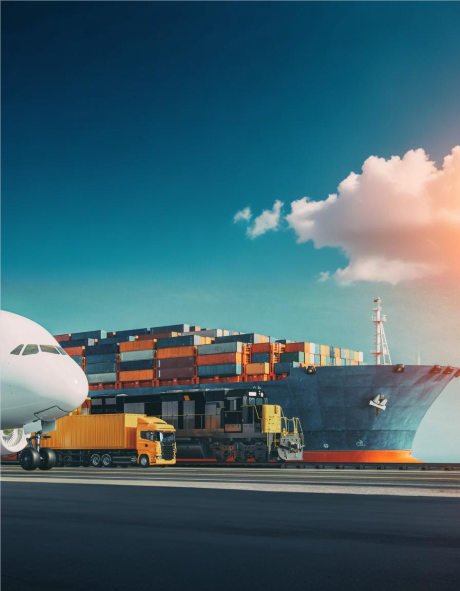
Ukraine faces a range of pressing challenges in the transport sector. How can ports remain accessible? How can the share of intermodal transport be increased while keeping costs under control? How can global logistics and supply chains be managed effectively? How can transport infrastructure be maintained in good condition without excessive expenses? How can "green" mobility be promoted, and greenhouse gas emissions reduced? These issues are complex and impact the interests of numerous stakeholders. Therefore, it is crucial to employ interdisciplinary approaches in decision-making.
Sign up for the course to acquire essential and up-to-date knowledge!
-
Available all the time
-
Course language: English
-
Certificate of completion
-
Course duration: 6 hours of video materials
About the course
•
Course Objective
•
Practical Value of the Course
•
Participant Requirements
Knowledge and Skills You Will Gain
-
-
Gain core knowledge of microeconomics and consumer theory that are essential for analysing consumer behaviour and transport modelling
-
-
-
Master the basics of transport demand modelling, which serves as a foundation for informed decision-making in transport and logistics
-
-
-
Learn the steps involved in transport demand modelling, from trip generation to route choice
-
-
-
Apply a policy analysis approach to transport, infrastructure, and logistics decisions/policy challenges
-
-
-
Formulate and structure tasks in preparation for analysis, ensuring clarity and consistency to achieve effective results
-
-
-
Understand the role of models in policy analysis, including how they influence the development of well-informed decisions
-
-
-
Work with scenarios to address future uncertainties and identify robust, long-term solutions
-
-
-
Present policy analysis results effectively, highlighting key findings and their practical implications
-
-
-
Understand the different types of models that can be utilised to support policy-making and their suitability for addressing specific tasks
-
-
-
Determine the functions these models can serve and how they contribute to achieving set objectives
-
-
-
Recognise the limitations of models and their outcomes to accurately interpret data and avoid erroneous conclusions
-
-
-
Evaluate the impact of policy decisions on transport systems using modern analytical tools and approaches
-
Who the Course is For
-
Public officials
responsible for working with the National Transport Model of Ukraine (NTMU)
-
Experts and consultants
specializing in transport modeling and policy development.
-
Transport and infrastructure professionals
who need to understand the impact of transport policies and infrastructure changes
-
Students, educators, and researchers
involved in the study of transport systems, logistics, and infrastructure
COURSE PROGRAM
Module 1. Transport models and their uses
6 lectures ·
-
1.1 What is a model?
-
1.2 What is a transport model? Common types of transport models
-
1.3 Uses of traffic flow and travel demand models
-
1.4 Uses of public transit and freight transport models
-
1.5 National travel demand models
-
1.6 Questions that transport models can help to answer
Module 2. Systems based framework for policy analysis
6 lectures ·
-
2.1 Framework for policy analysis: the components
-
2.2 Framework for policy analysis: explanation
-
2.3 Framework for policy analysis: exogenous forces
-
2.4 Framework for policy analysis: system domain
-
2.5 Framework for policy analysis: policy options
-
2.6 Framework for policy analysis: outcomes of interest
Module 3. Basic concepts
12 lectures ·
-
3.1 Demand, supply and equilibrium
-
3.2 Comparative statics
-
3.3 Comparative statics exercise: change in demand
-
3.4 Comparative statics exercise: change in supply
-
3.5 Comparative statics exercise: change in both supply and demand
-
3.6 Consumer behaviour
-
3.7 Preferences. Preferences and utility
-
3.8 Utility and consumer behaviour
-
3.9 Firm behaviour: how can we describe a firm? (p. 1)
-
3.10 Firm behaviour: how can we describe a firm? (p. 2)
-
3.11 Production and cost functions
-
3.12 Profit maximization
Module 4. Choice behaviour
6 lectures ·
-
4.1 Choice behaviour
-
4.2 Frameworks for modelling choice behaviour
-
4.3 Modelling the demand for transport
-
4.4 Elasticity of demand.
-
4.5 Factors affecting elasticity of travel demand
-
4.6 Estimating elasticity of travel demand
Module 5. Theory to analyse transport demand
6 lectures ·
-
5.1 Preferences
-
5.2 Utility
-
5.3 Consumer behaviour: the optimal consumption problem
-
5.4 Consumer surplus
-
5.5 Assumptions and modelling
-
5.6 Utility and mode choice
Module 6. Modelling travel demand: discrete choice models
10 lectures ·
-
6.1 Introduction to discrete choice modelling framework
-
6.2 Constructing a utility function
-
6.3 Example of route choice
-
6.4 Constructing a behavioural model of route choice
-
6.5 The random utility model
-
6.6 Probit, logit, and multinomial logit models
-
6.7 Model specification
-
6.8 Estimating choice probabilities using Maximum Likelihood Estimation (MLS)
-
6.9 Collecting data on user behaviour
-
6.10 Forecasting travel behaviour
Module 7. Modelling travel demand: approaches
3 lectures ·
-
7.1 Approaches for modelling travel demand
-
7.2 Modelling framework
-
7.3 Trip based 4-step travel demand model
Module 8. Modelling travel demand: freight transport
4 lectures ·
-
8.1 Modelling the demand for freight transport
-
8.2 Framework for modelling demand for freight. Growth factors
-
8.3 Logistics and models of demand for freight transport
-
8.4 Freight model specification
Module 9. Why is policy analysis needed?
7 lectures ·
-
9.1 CLIOS (Complex ‒ Large ‒ Interconnected ‒ Open ‒ Socio-technical Systems)
-
9.2 "Eras" in thinking about transport. A framework for thinking about policy problems
-
9.3 Eight themes
-
9.4 Definition of policy analysis
-
9.5 Examples of policy debates
-
9.6 Some definitions
-
9.7 Systems framework for policy analysis
Module 10. How to do a policy analysis
8 lectures ·
-
10.1 Step 1: Problem formulation
-
10.2 Step 2: Specify goals
-
10.3 Step 3: Specify outcome indicators
-
10.4 Step 4: Scenarios in a policy analysis
-
10.5 Steps in developing scenarios
-
10.6 Step 5: Select policy options
-
10.7 Step 6: Analyse & compare options (using models)
-
10.8 Step 7: Present results to actors
Dr. S. Adnan Rahman
Team Leader, “Assistance to the Ukrainian authorities for establishment of National Transport Model and Master plan” (EU-financed project). He is an experienced leader, disruptive thinker, change maker, and policy analyst with over 25 years of experience working with the public and private sectors. He has advised public and private sector clients in Europe, the USA, Asia, and the Middle East. Also Dr. Rahman has advised the governments of the United States, Philippines, Pakistan, Brazil, The Netherlands, India, Turkey, Sweden, Norway, Ukraine, Egypt, and Qatar, various Directorates of the European Commission, the World Bank, and the Asian Development Bank.
Course Partners and Donors
The course was produced with the financial support of the European Union within the project “Assistance to the Ukrainian Authorities for Establishment of National Transport Model and Master Plan”. Its contents are the sole responsibility of the project “Assistance to the Ukrainian Authorities for Establishment of National Transport Model and Master Plan” and the company Egis and do not necessarily reflect the views of the European Union.


Transportation modeling and policy analysis
Sign up for a free course and start learning right now!
Sign up for the courseForeign authors
Learning at any time
Testing
Certificate of completion
FREQUENTLY ASKED QUESTIONS
Is the course free of charge?
What are the requirements for students to prepare before starting the course? This course assumes that potential participants have basic knowledge of microeconomics, fundamentals of quantitative modeling and basic principles of transport economics. What time is the class?
Video lectures, test assignments, the forum, and the opportunity to earn a certificate are available at any time.What is the form of confirmation of online learning results?
Certificate of completion of the online course. To receive a certificate, it is necessary to score at least 60% of the total number of points according to the test results. The authenticity of the certificate can be checked by the link indicated on it.
Can I receive a certificate upon completing this course?
Yes. Complete all course assignments to earn a certificate of completion signed by the course author.
Не знайшли відповідь?
Центр допомоги
What time is the class?
What is the form of confirmation of online learning results?
Can I receive a certificate upon completing this course?
Не знайшли відповідь?
Центр допомоги